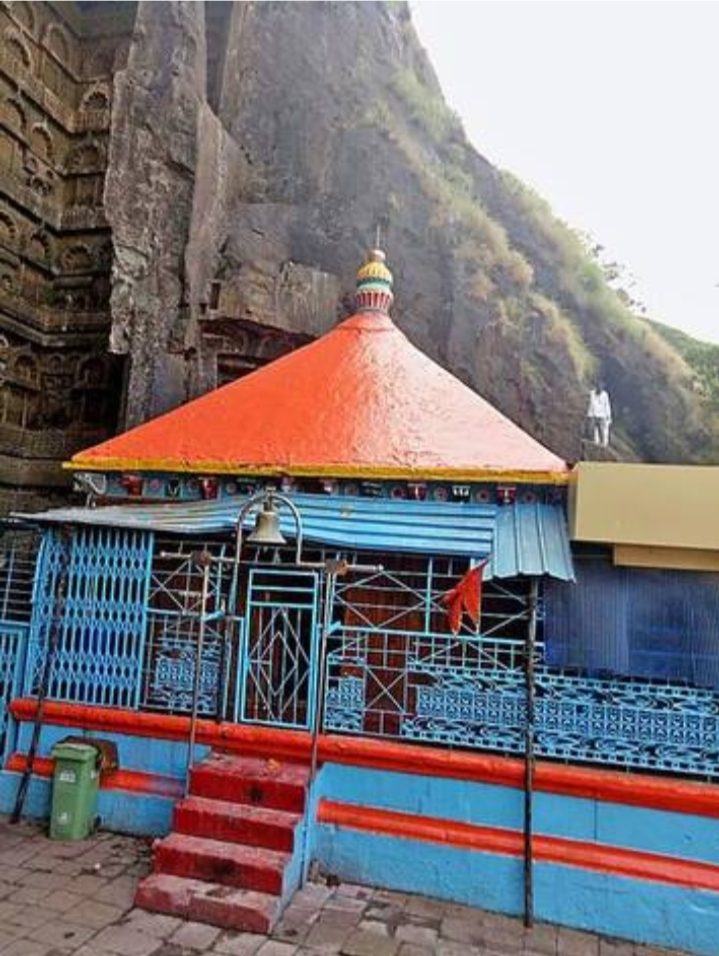
Temple darshan hours
The temple sits at the top of a hillside stairway and follows a two-session rhythm familiar to a Marathi shrine: an early-morning opening for darshan and aarti, a quieter midday period when the sanctum closes, and a second session in the evening through to night. The times below are our general guidance for planning. Because the sanctum closes over midday, and because hours ease or extend around festivals and with the season, we suggest treating them as a guide and allowing a little buffer when arranging travel.
If you have only a narrow window, the early-morning session is usually the calmest and coolest part of the day for the climb. Arriving well before the midday break also reduces the risk of finding the sanctum closed when you reach the top. For the latest on a particular day, you are welcome to reach us through our official channels, and our visitor FAQ answers the most common questions.
Aarti
We perform a morning aarti around dawn and an evening aarti around dusk. We keep to around dawn and dusk rather than a single fixed minute, because aarti shifts gently with the season, the lunar calendar and our festival schedule. If you are travelling specially to attend, plan around dawn or dusk and arrive a little early.
To witness an aarti, plan to be settled at the shrine a little before dawn or dusk and allow extra time for the climb. During the evening, the lamplit aarti is a particularly atmospheric moment, but it also coincides with higher footfall, so patience in the queue helps. For details on the climb itself, see The Climb, Parking & Accessibility.
Aarti is held around dawn and dusk; the exact moment shifts gently with the season · we suggest arriving a little early to be settled before it begins.Karla Caves (ASI) hours — a separate monument
The Karla Caves share the same hill as the temple, but they are a distinct site: an ancient Buddhist rock-cut complex that is a centrally protected monument under the Archaeological Survey of India. The caves keep their own opening hours and are ticketed separately from temple darshan. Please do not assume the temple and the caves open and close together — plan them as two separate visits on the same trip.

| Site | Timings | Managed by | Entry |
|---|---|---|---|
| Ekvira Devi Temple (darshan) | Approx. 5 AM–12 PM & 4–9 PM | Temple Trust | Free darshan |
| Karla Caves (monument) | Approx. 9 AM–5:30 PM | Archaeological Survey of India (ASI) | Separate ASI ticket (confirm current charge) |
Because the cave hours close in the late afternoon, a common plan is to reach the caves earlier in the day and visit the temple in the morning or evening session around them. For ticket guidance and what to expect inside the chaitya hall, see the Karla Caves visitor information.
Festival-day note: hours change
On major festival days, opening hours, queue arrangements and crowd-management measures can all differ from an ordinary day. During the Chaitra Yatra and Navratri in particular, the temple may extend or rearrange its sessions, lines can be long, and access points may be regulated. Cave timings can also be affected by crowds and local arrangements. If your visit falls on or near a festival, treat the hours above as provisional and check closer to the date. Festival dates follow the Hindu lunar calendar and shift each year — check the festival calendar when planning.