A Journey Through Time
From ancient Buddhist caves to a living Hindu pilgrimage center
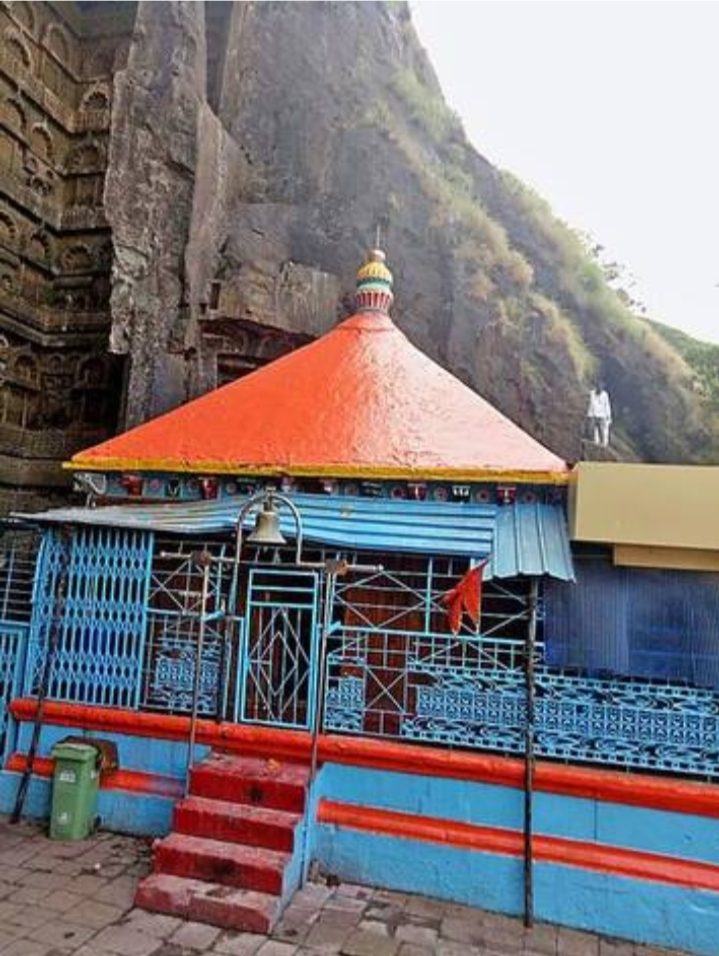
Buddhist Origins
The Karla Caves were first excavated as Buddhist monastic retreats. The Great Chaitya Hall, the largest in India, was carved during this era. Buddhist monks and traders along ancient trade routes funded the construction of these remarkable rock-cut sanctuaries. Inscriptions in Brahmi script from this period can still be seen adorning the cave walls.
Hindu Transition
As Buddhism declined in the Deccan region, the cave complex gradually transitioned to Hindu worship. The site began attracting Hindu devotees, and early forms of Goddess worship were established at the caves. A small shrine to a local deity was consecrated at the entrance to the main cave, marking the beginning of the Ekvira tradition.
Rise of Ekvira Worship
The cult of Goddess Ekvira grew significantly during the medieval period. She became the Kuladevi (family deity) of the Koli, Agri, and Chandraseniya Kayastha Prabhu (CKP) communities. The Peshwa rulers of the Maratha Empire offered patronage to the temple, reinforcing its importance as a regional pilgrimage center.
Archaeological Recognition
British archaeologists documented the Karla Caves as one of India's finest rock-cut monuments. The caves were listed as a protected heritage site. During this period, the temple continued to serve as an active worship site while the surrounding caves attracted scholarly attention from around the world.
Living Pilgrimage Center
Today, the Ekvira Devi Temple is a thriving living shrine, while the adjoining Karla Caves are a centrally protected monument under the Archaeological Survey of India (ASI). The temple draws large crowds during Navratri, the Chaitra palkhi, Chaitra Purnima, and other Hindu festivals. Amenities for devotees have grown over the years while the ancient character of the site is preserved.
Goddess Ekvira
The revered Kuladevi of the Koli, Agri & CKP communities
The Divine Mother of the Western Ghats
Goddess Ekvira, also known as Ekvira Aai, is one of the most revered deities in Maharashtra. She is considered a form of Goddess Renuka (Yellamma) and is worshipped as the Kuladevi (clan deity) by millions of devotees from the Koli, Agri, and CKP communities.
The name "Ekvira" derives from Sanskrit, where "Ek" means one and "Vira" means brave or heroic - signifying "The One Brave Goddess." She represents courage, protection, and maternal love for her devotees.
The Sacred Murti
The idol of Ekvira Devi is self-manifested (Swayambhu) and is enshrined in a small sanctum at the entrance of the Great Chaitya Hall at Karla Caves. The deity is depicted with multiple arms, holding divine weapons and symbols of power. The sanctum is adorned with vermilion, flowers, and offerings from countless devotees.
Significance to Communities
- Koli Community: Fishermen of the Konkan and Mumbai coast worship Ekvira as their primary Kuladevi. Before every fishing voyage, they seek her blessings for a safe journey and bountiful catch.
- Agri Community: The agricultural community of Thane and Raigad districts considers Ekvira as their protector and provider of good harvests.
- CKP Community: The Chandraseniya Kayastha Prabhu community traces their devotion to Ekvira back several centuries, considering her their ancestral deity.
- Broader Worship: Beyond these communities, Ekvira Devi is revered by devotees across Maharashtra and beyond, especially during Navratri and Chaitra Purnima.
Shielding devotees from harm and evil forces, especially seafarers and travelers
Bestowing bravery and strength upon warriors and those facing life's challenges
Rewarding sincere devotion with blessings of prosperity and family welfare
Patron of the Koli fishing community, ensuring safe sea voyages and good catches