The daily rhythm of worship
Like most living Hindu temples in Maharashtra, the Ekvira Devi Temple observes a daily cycle of worship. There is a morning aarti around dawn and an evening aarti around dusk, with the goddess attended through the day. We keep to around dawn and dusk rather than a fixed clock-time, as aarti shifts gently with the season and on festival days.
Aarti is held morning around dawn and evening around dusk; the exact moment shifts gently with the season and on festival days. See Timings & Aarti.
Within this cycle you may encounter elements common to goddess worship:
- Aarti — the ceremony of waving lit lamps before the deity, accompanied by devotional singing, performed morning and evening.
- Abhishek — the ritual bathing or anointing of the deity as an act of reverence.
- Naivedya — food respectfully offered to the goddess, later shared.
- Prasad — the blessed offering returned to devotees after worship.
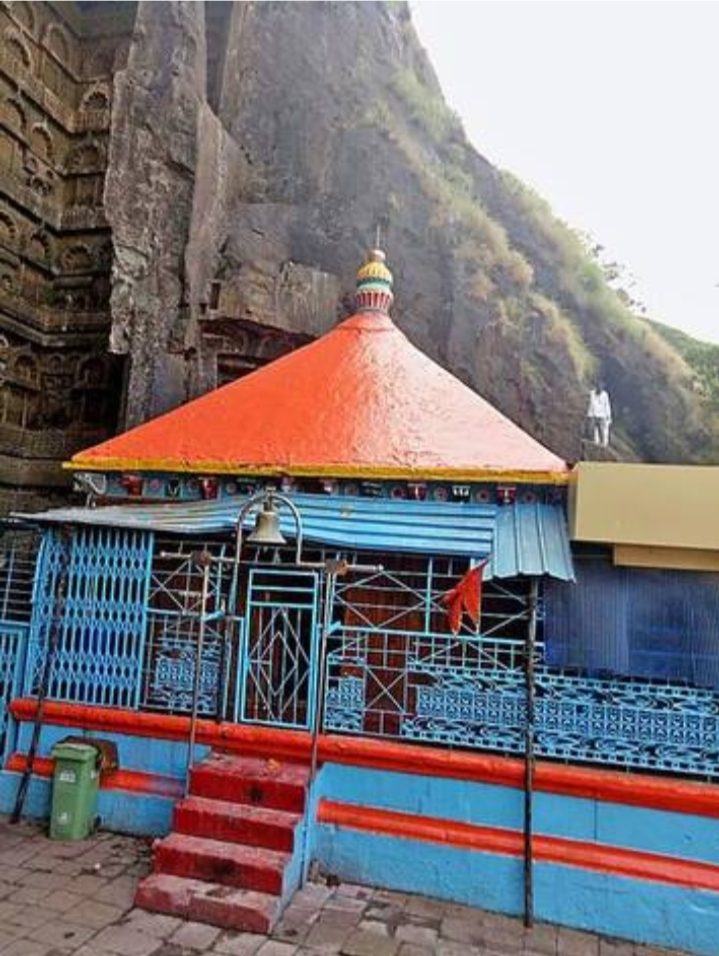
Reaching the shrine is itself part of many devotees’ observance, since the temple is approached on foot up the hill at Karla.
Common offerings
Offerings brought to a mother-goddess shrine such as this commonly include flowers and garlands, a coconut, sweets, and items like turmeric and vermilion (haldi–kumkum) and incense. Many families come specifically to fulfil a vow made to Ekvira Aai as their Kuladevi. What is appropriate can vary, so if you are unsure, it is always fine to observe what other devotees do or to ask at the shrine.
Etiquette & what to carry
A few simple courtesies make for a respectful visit:
- Dress modestly. Since 7 July 2025 we ask devotees to wear traditional or decent attire; revealing or Western clothing may be refused. See Guidelines.
- Footwear is removed before entering the shrine, as at any temple.
- Maintain quiet and order in the queue, and follow any instructions from temple staff.
- Be considerate about photography near the sanctum; ask or look for signs before photographing.
- Carry water and go at a steady pace for the climb of several hundred steps; small offerings such as flowers, a coconut or sweets are easy to bring along.
In force since 7 July 2025, by order of the Trust · please dress modestly out of respect for the shrine.
Seva & donations — coming soon
Our official seva (sponsored worship), pooja-booking and donation facility is being prepared and will be published here soon. To keep devotees safe, we share payment details only through our own official channels.
If you wish to make an offering or arrange a seva now, please use our official channels — see the seva & donations and contact pages — and please do not rely on payment information found elsewhere.