
This page is about the caves, not the temple. The information here applies to the ASI-managed Karla Caves — their hours, ticketing and rules. The Ekvira Devi Temple is a separate, living shrine with its own timetable; darshan there is free. For temple darshan and aarti, see Timings & Aarti; for the caves' history and architecture, see the Karla Caves overview.
Opening hours
As a protected monument, the caves follow the Archaeological Survey of India's visiting arrangements rather than the temple's. The window is a daytime one that closes in the late afternoon. As these hours are the ASI's to set and can change with the season, please treat the figure below as a guide and confirm it with the ASI before you travel.
The closing time can shift with the season and with sunset. Plan to arrive with time to spare, as last entry may be earlier than the stated closing.
Cave entry ticket
The caves are separately ticketed by the ASI. This is a distinct charge from anything at the temple — in fact, darshan at the Ekvira Devi Temple is free, while the caves require a ticket as an ASI monument. Charges of this kind are revised from time to time, so rather than print a figure that may be out of date, we ask you to confirm the current ASI charge at the ticket point when you arrive.
- The cave ticket is not the same as anything to do with temple worship; the temple is free to enter.
- Rates may differ for different categories of visitor and can change — confirm the current ASI charge on site.
- We point you to the current ASI charge on site rather than print a figure that may be out of date.
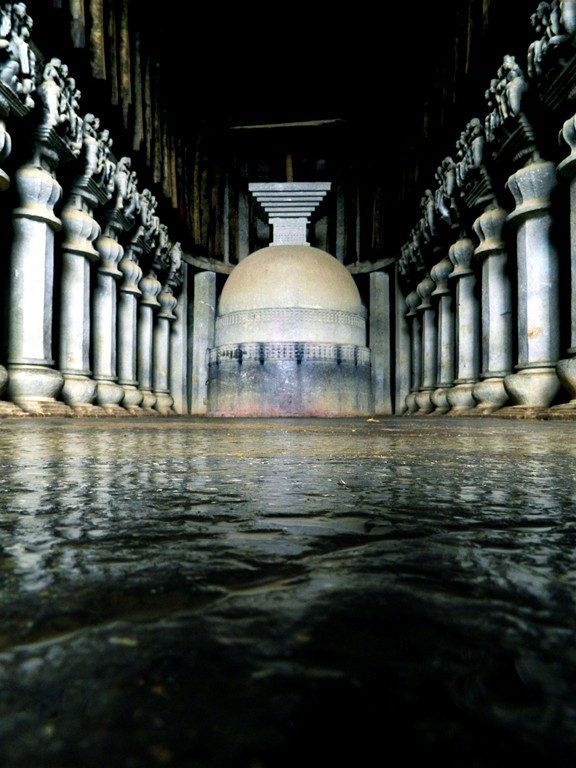
Conservation & photography
The carvings are centuries old and irreplaceable, so a little care goes a long way. The points below reflect the general expectations at a protected ASI site; specific signage at the monument takes precedence.
- Do not touch the carvings. Skin oils and handling wear away the stone over time.
- Keep to the marked paths and steps. They protect both the monument and you.
- No littering and no defacing or scratching of surfaces — this is a protected monument.
- Hand-held still photography for personal use is generally fine, but commercial photography, video shoots and drone photography require ASI permission.
- Follow the instructions of site staff and any posted notices.
Photography and access rules are set and updated by the ASI; confirm what is allowed on the day, especially for tripods, professional gear or drones.
Where to buy tickets
Tickets for ASI monuments are typically purchased at the site's ticket counter on the day of your visit, and some ASI sites also offer online or kiosk options. Because arrangements vary and can change, the safest approach is to confirm the ticketing point on site when you arrive at the caves.
- Plan to buy your cave ticket at the monument unless you have confirmed another official option.
- Carry some cash as a fallback, in case a particular payment method is unavailable on the day.
- Keep your ticket with you while inside the complex.
We do not handle or sell tickets, and there is no booking facility on this site. Confirm the current arrangement on site.
Caves close earlier than the temple. Because the ASI window shuts in the late afternoon while the temple has an evening session, it usually makes sense to see the caves earlier in the day and fit darshan around them. For the temple's own hours and aarti, see Timings & Aarti, and for on-site conduct see Guidelines & Dress Code.