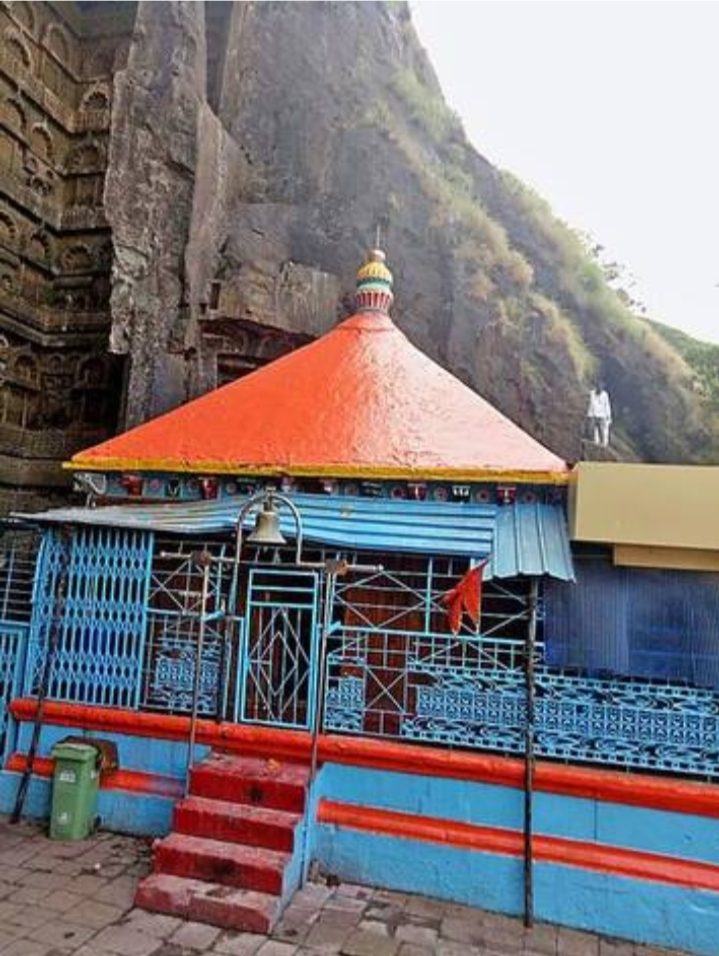
Navratri is one of the busiest stretches in the temple's year. For nine nights, devotees of Ekvira Aai — honoured as a form of the goddess Renuka — climb the hill at Karla in larger numbers than usual to offer worship to the Goddess.
The nine nights
Navratri means “nine nights.” It is a pan-Indian festival of the Divine Feminine, observed with worship of the Goddess across her many forms. At a Devi shrine like Ekvira Devi Temple, where Ekvira Aai is the presiding goddess and the Kuladevi (family deity) of the Koli, Agri and CKP communities, Navratri carries particular weight: it is a natural time for families to fulfil vows, seek blessings and return to the hilltop together.
Across India Navratri is observed several times a year, but two occasions dominate — the autumn Sharad Navratri and the spring Chaitra Navratri — and both bring significant footfall to Karla.
Sharad and Chaitra Navratri
Sharad (or Durga) Navratri falls in the lunar month of Ashwin, in autumn, and culminates in Vijayadashami (Dussehra). It is the more widely celebrated of the two and typically the busier at the temple.
Chaitra (or Vasanta) Navratri falls in the spring month of Chaitra and overlaps the run-up to the temple's great Chaitra Yatra, so this part of the year sees back-to-back surges of pilgrims.
2026 dates (approximate): Sharad Navratri runs roughly 11–20 October 2026 (Vijayadashami around 20 October); Chaitra Navratri runs roughly 19–27 March 2026. Both are set by the Hindu lunar calendar, so the Gregorian dates change every year — treat them as approximate; we confirm the exact dates and programme nearer the time. Dates follow the panchang and shift each year.
Visitor and darshan guidance
A Navratri visit is rewarding but demanding. Because footfall is heavy, darshan queues lengthen and the stairway stays busy through the day. We share our full day-by-day programme for the nine nights closer to Navratri, once the year's timings and arrangements are settled. For any special timings during the festival, please check our official channels or reach us directly.
General visitor information still applies, only more so during a crowded festival:
- Arrive early in the day to beat both the heat and the longest queues, and allow far more time than a normal visit.
- Climb on foot. The route is a long stairway of several hundred steps with no doli-for-hire or ropeway, and it is not wheelchair accessible.
- Keep your group together on the steps and in dense crowds, especially children and elderly companions.
Dress and crowd advice
Since July 2025 the temple has asked devotees to dress modestly in traditional or decent attire; revealing or Western clothing such as shorts, mini skirts and ripped jeans may be refused. During Navratri, when crowds peak, dressing appropriately and arriving prepared makes the visit smoother for everyone. Carry water, wear sensible footwear for the climb, and be ready for congestion on the approach roads near Karla and along the Mumbai–Pune corridor around Lonavala.
Plan around the crowds: expect heavy footfall and travel delays through both Navratri periods. Confirm any special programme with the temple, and review the current season's travel and safety advisories. See Guidelines & Dress Code and Best Time & Weather before you go.
For the year's festivals in one place, with each date marked approximate, see the festival calendar. To picture the temple and the hill outside festival season, browse the gallery.